What Does “No Dar Papaya” Mean?
No dar papaya, or “don’t give papaya”, is a Colombian expression used across the country to advise against making yourself an obvious target by drawing attention or putting yourself in a vulnerable position.
Some examples of how to “not give papaya” can be not wearing expensive jewellery, designer clothes, bags, or watches.
But it’s not only about how you dress or flexing money you may have, it’s also about not putting yourself in situations where you could become a target: walking outside super late at night, wandering deserted or dark streets, being alone somewhere you don’t know, or looking confused or lost- as us tourists often do.
For women, there’s an added layer of caution: not accepting drinks from strangers, not going home with someone you don’t know or trust, and taking extra precautions when travelling alone on public transport. Read my Medellín Metro Guide to learn how safely get around the city.
This has never happened to me, fortunately.
Having lived in two stereotypically dangerous cities both for one year, Medellín and Rio de Janeiro, I’d also add speaking very loudly in English and not being culturally sensitive to that list.
It’s a shame to say it, but I do think that if you’re in a large group of only English speakers, more so when you’re all obviously gringos, it puts a target on your back. If not for robberies, then for scams. You never know who’s listening, who’s having a bad day, or who’s simply ready to try it with you.
No dar papaya isn’t just a phrase for tourists. Locals abide by it too, as a kind of moral code for staying safe.
Essentially, it reminds you to keep your wits about you and avoid making yourself an obvious target, whether or not you’re “giving papaya” without realising it.
It’s a way to stay aware that anything could happen, and things do happen, and so to minimise that risk where possible.
Is Medellín Safe for Tourists?
Travel safety in Colombia is talked about at length online.
Plenty of people are afraid to even enter the country, assuming it’s overrun with cartels and guns. On the other end, you’ve got social media personalities and digital nomads arriving in droves, insisting it’s all an outdated stereotype and that Colombia and Medellín are perfectly safe.
After living in Medellín for a year and travelling across the country, I can tell you it’s a bit of both.
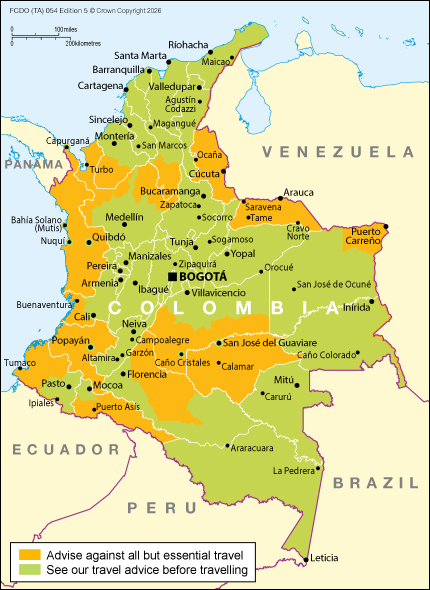
There are certain areas of Colombia I’d advise against visiting unless absolutely necessary. The Colombia-Venezuela border is one of the most volatile right now in 2026, and the south is dealing with ongoing internal violence between indigenous groups and armed groups. The Pacific coast and department of Chocó, specifically the city of Buenaventura, also call for a higher level of caution.
Then there are the large cities: Bogotá, Medellín, Cali. A denser population simply means more opportunity for something like robbery or pickpocketing to happen, which is true of big cities almost anywhere.
Sounds like a long list of places, but the majority of tourists coming to see this beautiful country will likely run into zero problems, as long as you don’t do anything objectively stupid.
If you’re looking for ideas on how to plan a safe, guaranteed great trip, I have a 3 Day Medellín Itinerary here.
Common scams in Medellín:
Sadly, there are scams that happen around the city that end up swiping thousands off tourists and leaving them with a bad experience of the city, and sometimes put them even real danger. Here’s a couple of them and what to do to avoid it.
1. The Dating Apps
Firstly, no Medellin safety article is complete without the dating profile scam. Less a traditional scam and more of an actual warning, especially towards men, but DO NOT USE the dating apps here, no matter how temping.
I’ve heard so many stories about men not being able to help themselves, enticed by a beautiful colombian woman who will then drug and rob you, sometimes in your own apartment. I really hate to perpetuate the stereotype, but this sadly this one is a reality and happens way too often.
The advice is simple, if it seems to good to be true, it likely is. Just avoid it.
2. (Some) Yellow Taxis
Another common scam is the taxi meter in those yellow city taxis. Sometimes those meters have been tampered with, and either increase dramatically in price over a matter of minutes or simply the taxi driver won’t let you leave until you pay a price of their choosing.
The easiest way to avoid this one is to just use ride hailing apps like Uber, inDrive and DiDi. They have customer service teams and more protections in place for riders, so you can at least get your money back. It doesn’t remove a bad taste in your mouth, though.
3. Street Performers
Finally, in my opinion not a scam, but I know for some that they consider street performers, rappers, dancers, or anyone that stops you in the street or at a red light and requests money for their services, a scammer, as many start performing without even checking to see if you wanted to pay.
My thoughts here are that these performers often work very hard, they’re not fleecing or harming anyone in the same way as the two examples above, and a small 2mil note is likely very little to you but can affect their livelihood a lot.
If you really don’t want to pay, a simple smile and a sincere “gracias” usually do the trick. Or just keep walking and don’t interact.
Is Medellín Dangerous?
This is too large a question to answer from one blog post, one traveller, or one person’s perspective. “Dangerous” means something different for everyone depending on their circumstances.
Current UK government travel advice for Colombia doesn’t single out Medellín’s tourist areas for a heightened warning. The regions it does flag for caution are specific: parts of Chocó Department, the borders with Venezuela and Ecuador, and pockets of Cauca, Putumayo, and Meta. It’s worth checking gov.uk’s Colombia travel advice directly before you travel, since it’s updated regularly and I’d rather send you to the source than risk this page going stale.
And for my readers across the pond, or anywhere else in the world, make sure to check your local government travel guidance for the most up to date information. Each country has it’s own risk evaluation and advice on travel to Medellin and to Colombia, which can sometimes affect your travel insurance policy, should the unlikely event of something bad happening.
In short, yes, Medellín has dangerous parts, similar to anywhere else in the world. Higher poverty levels make petty and opportunistic crime more likely than in some other parts of the world. But Medellín is nowhere near the warzone it was in the 1980s and 1990s. As a western tourist, you can go almost anywhere you’d need to go safely.
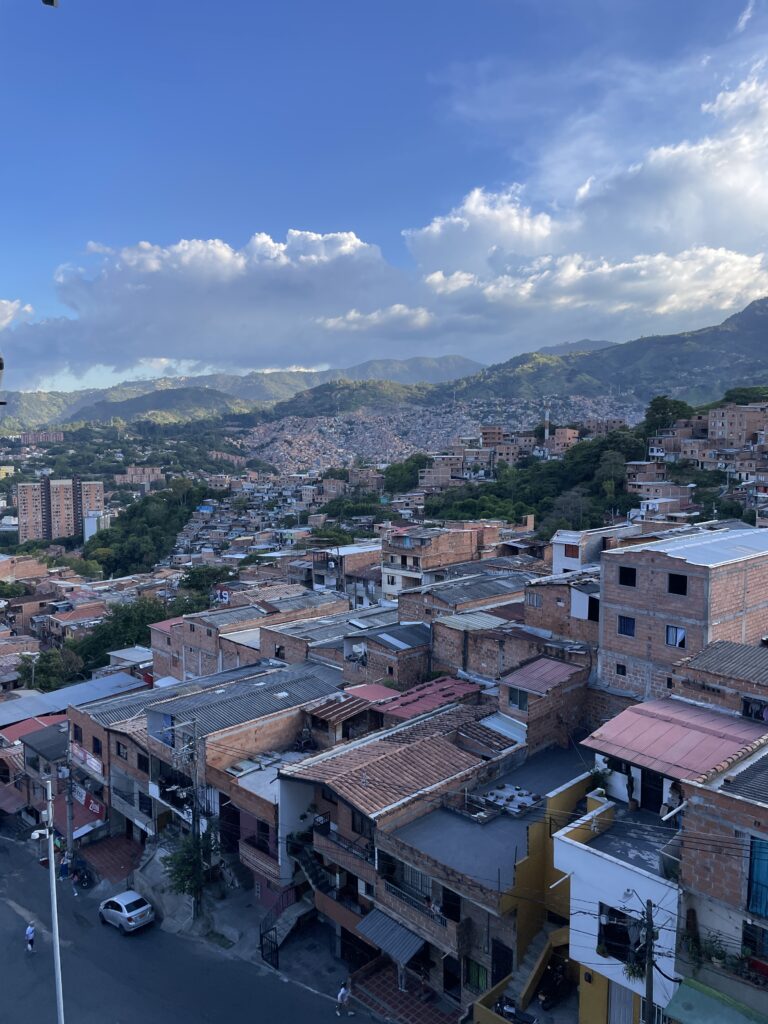
Certain barrios are less developed and have far less opportunity than others, similar to the mountainside neighbourhoods around Comuna 13, and that naturally means more people looking for one. But in the areas with higher tourist numbers, Medellín is safe.
Even El Centro, the city centre, is perfectly fine to walk around during the day as long as you keep your wits about you and your belongings close to your chest.
Find out How to Plan A Trip To Medellín: all you need to know before you go.
Safe Places to Stay in Medellín
If you’re wondering where to base yourself, safety in Medellín comes down largely to neighbourhood. El Poblado, Laureles, and Envigado all see high numbers of tourists and are considered safe places to stay in Medellín, with El Poblado and Laureles the two most popular for visitors. Arví or Santa Elena, on the edge of the city, is safe too and worth it if you want a greener, quieter base.
My Medellin Neighbourhood Guide weighs up which area is best for you in terms of safety – I highlight the popular tourist neighbourhoods as well as some safe local areas if you’re unsure.
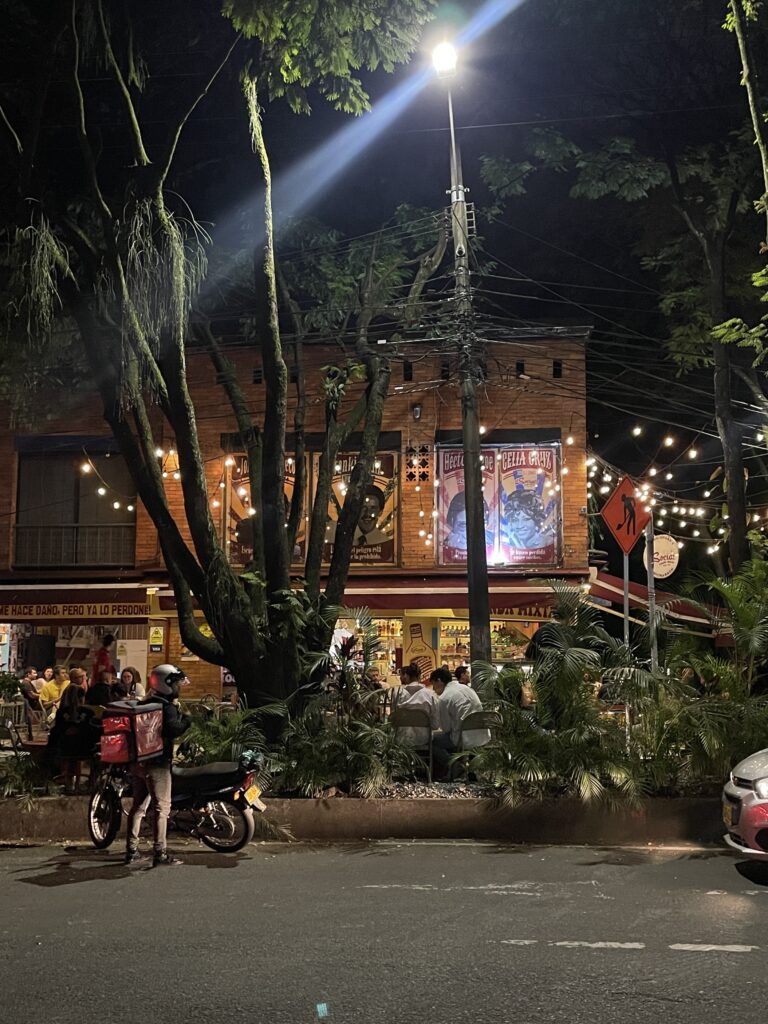
My Safety Experience in Medellín, Colombia
After a year in the country, I only had one real scare, and it happened in Medellín, in Poblado no less, the neighbourhood every tourist stays in because of its reputation for safety and security.
Looking back, I was definitely giving papaya. In hindsight, this was entirely my own fault and easily avoidable. Here’s what happened:
It was about 4am in El Poblado. I was walking home after a date with a Colombian guy I’d met a couple of times before and completely trusted, a great guy. We’d been buying bottles of beer throughout the night, talking and wandering the area, not wanting to stay in one place all night. It was one of those dates that went so well you lose track of time, and before I knew it, seven hours had passed, it was 3:30am, and the bars were closing.
We accepted the night was ending and started walking towards my hostel, so he came with me. At a main road just before the Manila district of Poblado, we crossed (there were zero cars out, it was 3:30am after all) and out of nowhere I felt someone yank my shoulder from behind.
It was a tall, scrawny guy trying to grab my crossbody bag off my back. At first I thought he was going for something worse, since he had one hand down his pants, which I now realise, and my date confirmed, was to make it look like he had a weapon.
My date told me to run, but I knew everything I’d heard about coming to Colombia, that a phone is never worth an injury or your life, and I knew I’d have to hand the bag over. Reluctantly, I started sliding it off my shoulder. That’s when I realised I’d stupidly left everything in that bag, passport included. To this day I have no idea why my passport was in there.
Once the bag was far enough down my arm for him to grab, he did, but my date decided to fight back. He managed to pin the guy to the ground, and it turned into more of a jiu-jitsu wrestling match than an actual fight, eventually persuading the guy to give the bag back with everything still in it.
The guy threw the bag aside, my date grabbed it, and we watched the robber run to a truck stopped not far down the road. He got in and they sped off.
I got my bag back, with everything in it, by the absolute skin of my teeth. More importantly, we were both unharmed. My date had a small scratch on his nose and a ripped t-shirt, and that was the extent of it.
As you can imagine, we were both filled with adrenaline and shock, wondering what had just happened and how my date had managed to fight off and beat someone who’d been verbally threatening us with a weapon.
So yes, scary experiences can and do happen in Medellín. I’ll never try to convince anyone the city is perfectly safe and that nothing will happen while you’re there. That wouldn’t be realistic, and honestly it would be a little disrespectful to the countless Colombians who warn foreigners that this kind of thing does happen, and to be careful.
That said, this is also one of the most textbook cases of giving papaya I’ve ever heard: drunk, alone, 3:30am, stumbling back to my hostel with a bag full of phones, a passport, and AirPods. Seriously, what was I thinking?
I tell this story not to scare you but to be honest about the realities of living and travelling here. I’d never lie and say a place is perfectly safe, or pretend nothing has happened to me, just to sell Medellín as some perfect safe haven. That said, I absolutely want everyone to experience it. Just be careful when you go, don’t be stupid, and you’ll have the best time of your life.
What To Do In An Emergency In Medellín
Firstly, get off this blog.
The emergency dial code in Colombia is 123 – you can call this number in the same way you would dial 999/911 to get the police or fire department on the line.
If something of yours has been stolen, many people say to just forget it, you’re never going to get it back and there’s a general low level of confidence in the Police.
However, if you’re a tourist and your phone/valuables have been stolen, go to the police station and file a report. This is for insurance, not with the aim of getting that valuable retrieved. Without proof of a police report or that anything happened, no insurance policy would accept the claim of a stolen item.
Again, this has never happened to me (close, but no) so I’ve never had to go through this process to provide more information, but this is what I would do the moment I realise it was gone.
Frequently Asked Questions
Is Medellín safe for tourists?
Yes, in the areas most tourists actually visit. El Poblado, Laureles, Envigado, Estadio, Sabaneta, and Arví all see high tourist numbers and are considered safe, and even the city centre is fine to explore during the day if you keep your wits about you.
Is Medellín dangerous?
Parts of it can be, in the same way parts of most large cities can be. Medellín is nowhere near the city it was in the 1980s and 1990s, and as a tourist sticking to well-visited areas, you can go almost anywhere safely.
What does no dar papaya mean?
It translates to “don’t give papaya” and means not making yourself an obvious target, whether through how you dress, how much attention you draw to yourself, or the situations you put yourself in.
What is dar papaya?
Dar papaya is the act of making yourself an easy target, for example by flashing valuables, walking alone late at night, or looking visibly lost or drunk in public.
What are the safest places to stay in Medellín?
El Poblado and Laureles are the most popular choices for tourists, with Envigado, Estadio, Sabaneta, and Arví also considered safe.
Is Colombia safe to travel to overall?
Most of the country is, but certain regions call for extra caution, including the Colombia-Venezuela border, parts of the south, and the department of Chocó. Always check your government’s current travel advice before you go.
Leave a Reply