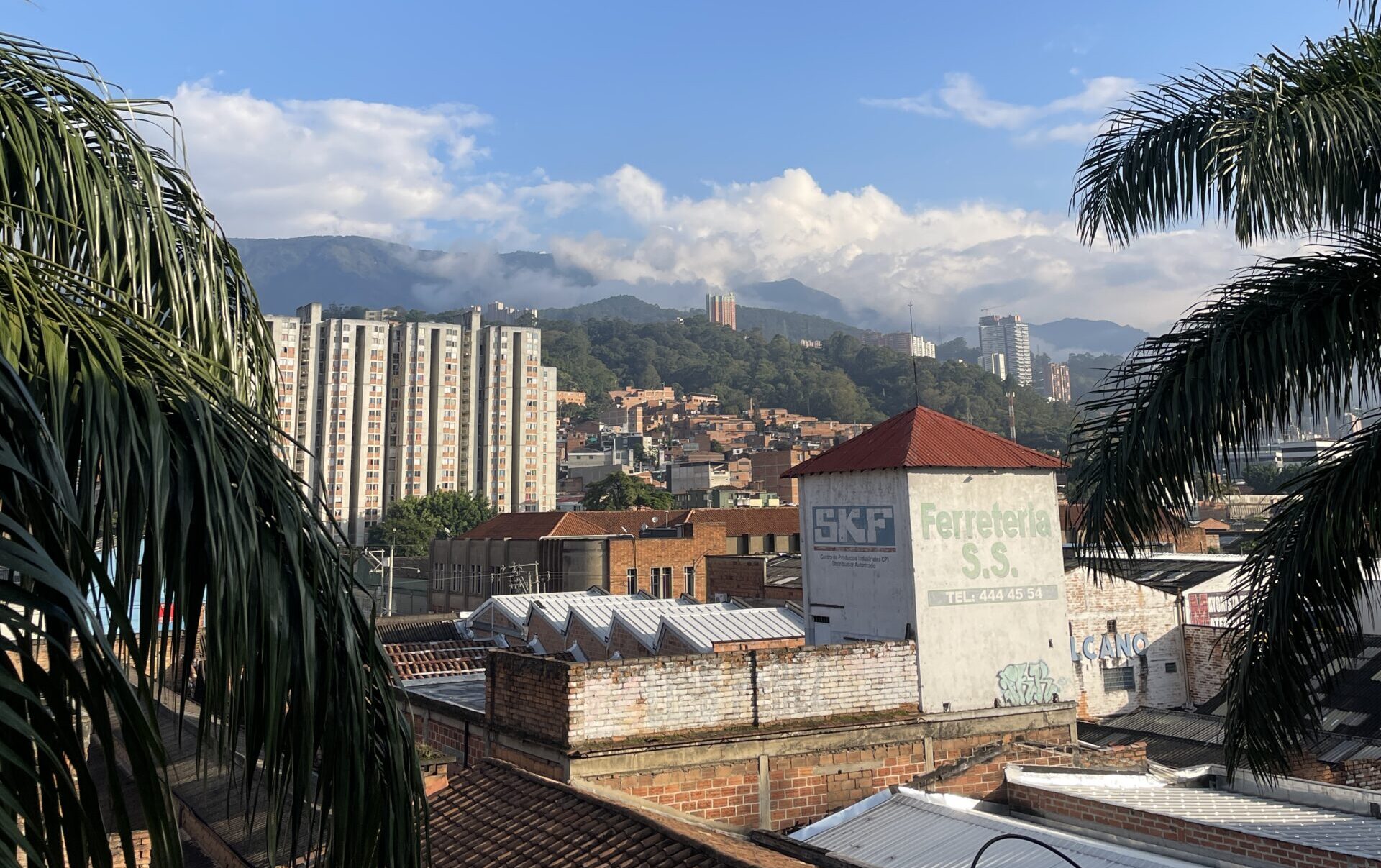
This post runs through the ins and outs of the Paisa’s pride and joy: the metro system. I’ve also included an easy reference guide at the end to know which stop you need to get you to all the main tourist points in the city.
Taking public transportation is one way to really understand a new city. It shines a light on so many things: daily life for the locals, insight into how the city is developing, even the physical topography of the land.
Medellín’s metro sits overground and runs along the river – also named after the city.
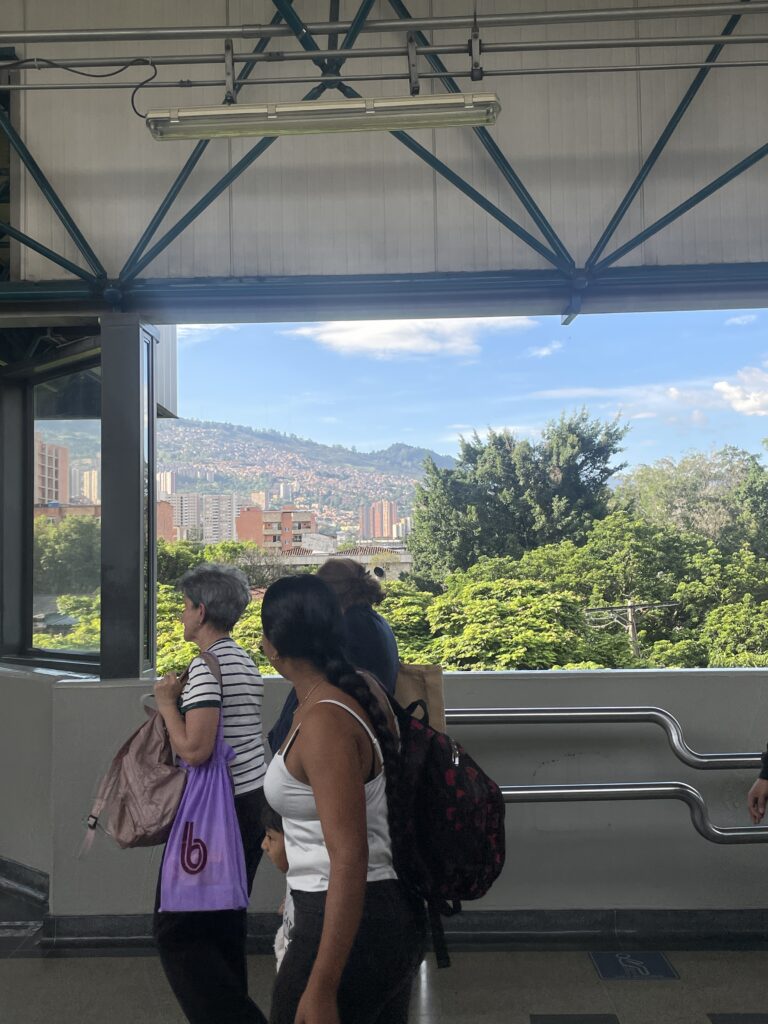
Fortunately, pretty much every location a tourist would need to visit has a metro station nearby, and I highly recommend using it at least once on your trip. It’s fast, safe, affordable, extremely clean, air conditioned, and the views of the mountains are stunning.
Check out my post on the best Medellín hostels in 2026.
It’s also incredibly easy to get around Medellín, Colombia using the metro once you have a basic understanding of the city’s geographical layout. Once you know how to use the metro in Medellín, it’s genuinely one of the best ways to get around the whole city.
Medellín Metro Overview: Lines & Cable Cars
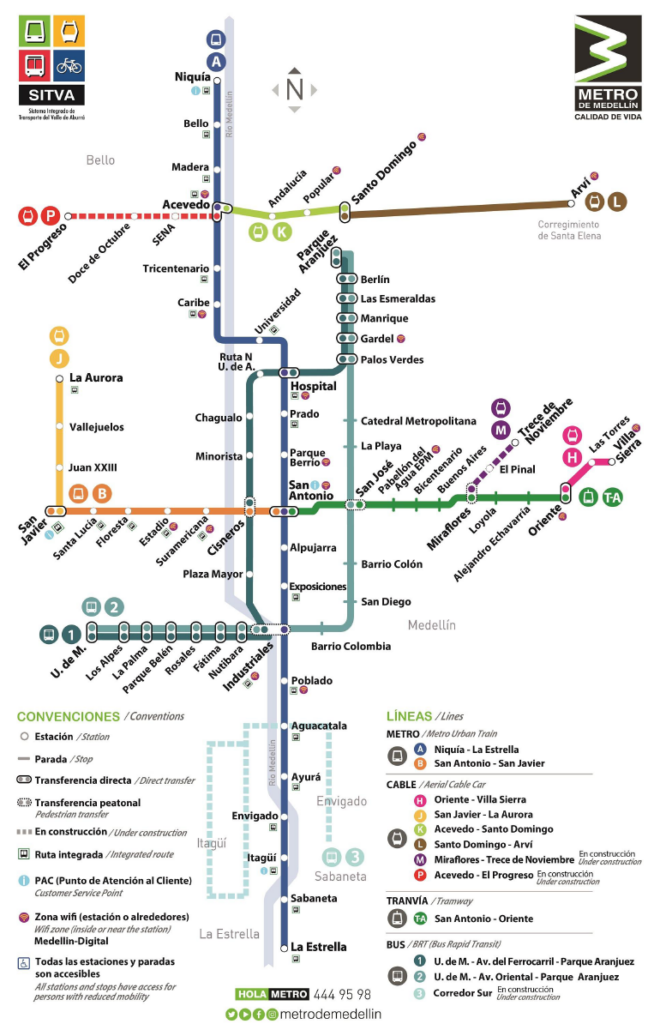
The first thing you need to understand: Medellín’s metro lines are named alphabetically, with the two major lines being Line A and Line B.
Line A is the north to south vertical line which nearly all tourist locations will be situated on. This runs from La Estrella in the south, to Niquía in the north. Line B connects San Antonio, the city centre/downtown region in the middle of Line A, to the west of the city ending in San Javier, or near the entrance of Comuna 13.
There are also differently labelled metrocable systems, which connect the higher barrios in the mountains to the city centre. You can take the cable car in Medellín for the same fare price, 3,820 COP.
One thing to know before you fly in: the metro doesn’t connect to José María Córdova International Airport in Rionegro. You’ll need a bus, taxi, private transfer, or ride-hailing app to get from the airport into the city, and then you can pick up the metro from there.
The metro runs from roughly 4:30am to 11pm on weekdays and Saturdays, and 5am to 10pm on Sundays and public holidays, but it’s always worth checking the official Metro de Medellín site for any current updates before you travel.
Fore more information on what to know before you go, I have a whole post on How To Plan Your Trip to Medellín here.
Medellín Metro Map
Medellín Metro Ticket Prices: How Much Does It Cost?
The one time fare is 4,400 COP. This is a QR code style ticket you buy at the ticket station which can be scanned and used for one leg of a metro journey. I’d only recommend this ticket if you’re in the city for a couple of days and wanting to use the metro once or twice.
The price of the physical, unregistered/tourist Cívica card is 12,100 COP. You’ll then need to top it up with at least 8,000 COP if you want to make a return journey. Each fare on the unregistered Cívica card costs 3,820 COP.
The fare is measured from when you tap in, to when you exit the metro system through the turnstiles, and the metro cable cars are included in this.
The cable car in Medellín is the same price if you tap in from there, and it’s included in the regular fare: you can connect to the cable car lines without paying extra.
The only exception is Parque Arví, where you’ll need to pay 26,000 COP to use the cable car and access the park, as this is a tourist destination and activity rather than a barrio or local community.
The tram in El Centro de Medellín is also 3,820 COP, should you want to visit more of downtown or visit the Museum of Memory.
How to Buy a Medellín Metro Ticket
There are two types of tickets you can purchase – a one time fare via QR code that you scan at the turnstiles, or you can purchase and top up a Cívica card and tap in.
Fare prices for a local Cívica card are slightly less than a one-time fare ride, which I recommend you purchase, also at the ticket booths, if you’re planning on exploring outside of tours or staying for a longer period of time.
Please note that you cannot buy or top up tickets with cash from outside the stations, they will not be legitimate and will not work. Only use the ticket booths inside the station.
You purchase a ticket at the physical in person booth located inside every station. Normally there is a small queue, but they pass quickly – just make sure you have cash in your hand to give to the ticket office worker.
Simply pass the Cívica card and the cash through the slat in the window where the officer will be working, and state how much you want to top up on the card. E.g “diez mil, por favor”.
You can also purchase the Cívica cards here in the same queue, it will just take a minute extra and some stations don’t offer them. El Poblado and San Antonio do.
Read my Medellin neighbourhood guide here on the best locations to stay in the city.
Note that this is a place that will give you change if you need to split a larger bill, so you can pass along a 50mil note if you’re needing smaller change.
How to Use the Metro in Medellín
Once you’ve purchased your physical Cívica card and topped it up with a couple of journey’s worth of trips, you’re all set!
Make sure you know which direction you need to go in – north heading towards Niquía or south heading towards La Estrella, and follow the clearly marked directions on the hanging boards in the station to the correct turnstiles.
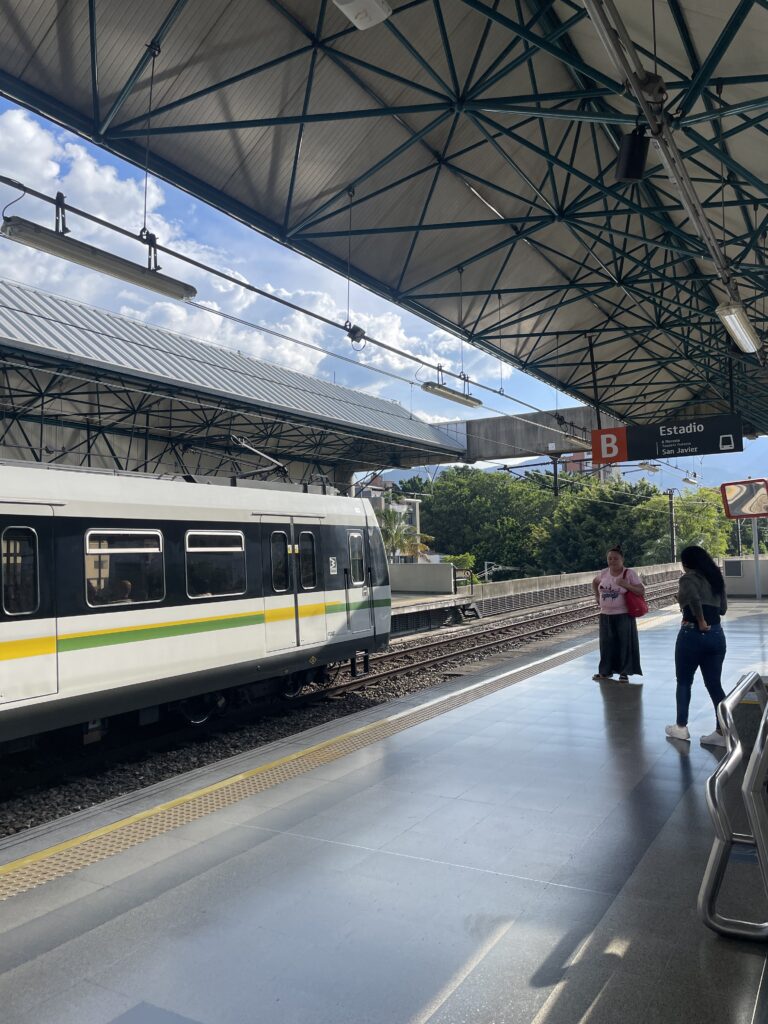
Simply tap in to the screens at the physical or electronic turnstiles, head down to the platform and wait for the metro, which usually arrives every 4-6 minutes.
Once you have tapped in, you are able to make connections within the same fare so long as you don’t exit the metro system.
For example, you could tap in at El Poblado, get off at San Antonio in the city centre, and then take the connecting B line already inside the metro to Estadio (Laureles), all for the same price. But, if you exited the metro through the gates at San Antonio, you would need to tap in again to access the B line.
Is the Medellín Metro Safe?
Yes, the Medellín metro is very safe. There is physical security presence on every single station and it receives regular foot traffic.
In fact, for tourists, this is a good place to jump inside quickly to use your phone and check Google Maps, call a friend, etc, rather than out in the open flashing your phone around.
The actual metro cars themselves are impeccable. Coming from London, you’ll never see vomit, food, or all sorts of “characters” like I’m accustomed to at home. You can really see that the locals care about and respect the metro system a lot.
For more safety information, read my Safety In Medellín post that outlines my experience after living in the city for a year.
Metro Etiquette: The Official (and Unofficial) Rules
- Absolutely no eating or drinking. I had an open cup of lemonade that I had taken to go from a cafe, and security stopped me before I tapped through the gate to either finish it or throw it away. I was also told by my tour guide that even water is not technically allowed to be drunk on the metro, but this is slightly more lenient if you absolutely can’t wait.
- No loud music, either from a speaker or even your headphones at full volume if it’s a nuisance to others.
- Short or quiet phone calls – a quick “I’m on the metro, I’ll call you when I’m off in 5 minutes” is better and more respectful.
- Let people off before you try to get on (people don’t follow this). Sorry Paisas, I will say this is the only rule I’ve seen that’s continually broken. Ideally, you should wait for everyone to get off and the train carriage to be emptied before those waiting start to board, but I have noticed it can be a bit of a free-for-all at times, mainly during rush hour.
- Obviously, give up your seat to a senior or someone in need (pregnant, with disabilities, small children, etc) when applicable. I don’t need to explain this further.
Medellín Metro Station Cheat Sheet for Tourists
San Javier – for Comuna 13
This is the metro line you’ll need to visit Comuna 13 from Poblado or the city center. It sits on Line B and so you’ll need to change at San Antonio if you’re coming from Poblado. From there, take Line B all the way to the end of the line. From there, you’ll need to walk about 20-25 minutes uphill on Calle 96 to reach the unofficial start of Comuna 13.
Poblado Metro – Tourist Hub
The tourist spot with hotels, bars, restaurants and shopping. Just note, Poblado metro sits at the bottom of a slight incline. You’ll need to walk up Calle 10 to reach the hustle and bustle, but it’s one straight road.
Read my Medellín neighbourhoods guide here, El Poblado vs. Laureles
San Antonio – Walking Tours & El Hueco
The main hub for walking tours, city tours, coffee tours, you name it. Also stop here for El Hueco, the shopping district and where to go if you want to buy counterfeit designer goods. Be more vigilant with your personal belongings here, as pickpocketing can happen in El Centro.
Check out 7 of The Best Activities To Do Whilst You’re In Medellín
Parque Arví – Medellín Cable Car to the Park
Self explanatory, it’s the cable car that goes to Parque Arví from metrocable stop Santo Domingo. Tourists need to pay 26,000 COP at Santo Domingo to use this extra arm of the metro. It has one of the best views on all of the metro system in Medellín, and it’s worth it just for the journey alone!
Estadio – Access to Laureles
Estadio is the only metro station that properly connects to Laureles – whilst I love this area, I don’t think it has the best transport links. However, it does drop you off at the start of Carrera 70. Estadio metro is also where you want to go if you have tickets to a football game. The whole surrounding area lights up with snacks, drinks and souvenir carts when there’s a game on, it’s a great atmosphere. Just expect busy queues before and after and maybe avoid this region during kick off or full time hours.
Caribe – Terminal del Norte Bus Station
It’s very close, basically joined to one another. The cheapest way to get to the bus station. From Terminal del Norte, you can get buses to pretty much anywhere north of the country and to Bogotá or San Gil.
The general rule of thumb for understanding Terminal del Sur vs Terminal del Norte is that Terminal del Norte = north, and Terminal del Sur = coffee region plus south.
Universidad – Botanical Gardens & Explora Park
Getting to botanical gardens, explorer park, family days out. Note: be a little more vigilant around here and Hospital metro stations as pickpocketing can occur. I recommend walking directly to where you need to go and not meandering off too much.
Parque Berrío – Botero Plaza & Museum of Antioquia
For Botero Plaza to sightsee the different Botero statues, and for the Museum of Antioquia. This station is about 2 blocks away from San Antonio, so you can choose between them and get to the same areas easily.
Leave a Reply