Colombia’s coast doesn’t lack on variety. In the space of a single trip, you can sleep in a treehouse listening to howler monkeys, wake up floating on the Caribbean in a hammock, and stumble out of a jungle bar still holding a cocktail. Forget the sea, the hostels down here are half the reason to come.
Here’s what you need to know: Colombia’s best beach hostels aren’t all on beaches. Some are in the jungle, some are on rivers, one is literally floating in the middle of the sea. I’m considering the “beach hostels” anything close to, or on, the Colombian coast, as this strip of land across the Caribbean sea is a backpacker hotspot.
It’s dotted with all types of accommodation from glamping to homestays to luxury hotels.
In this guide, I’ll be focusing on hostels in the £9-£20 a night range, with one exception being a little pricier.
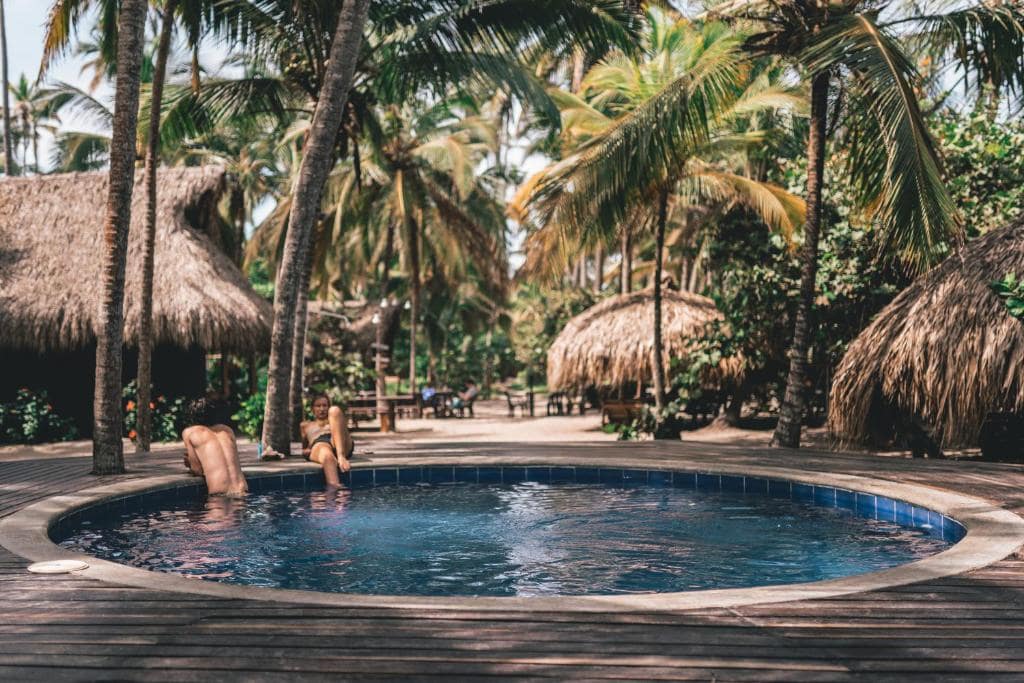
Los Hermanos, Costeño Beach
If someone asked me to describe the platonic ideal of a Colombian beach hostel, I’d describe Los Hermanos. It sits right on the sand at Costeño Beach; a long, quiet stretch of Caribbean coast between Santa Marta and Tayrona, with a pool that’s always got a game of volleyball happening, and an energy that makes it genuinely hard to leave.
What makes it special
The combination of beachfront access and a proper pool is rarer than it should be in Colombia. At Los Hermanos you get both, plus a social atmosphere that seems to generate itself. I arrived knowing one person I had met from a previous hostel, and within two hours was planning a day trip with four strangers. Sun loungers, cold beer, and a bar/restaurant that’s busy but not overwhelming. It’s the perfect balance of social but not overstimulating.
Activities on offer
This hostel organises or can connect you with snorkelling, hikes into the jungle, and day trips toward Tayrona. The surrounding stretch of coast is walkable and largely undeveloped, which makes it a decent base for a few days to chill out and do nothing too. There’s enough to keep you occupied without it feeling “packaged”.
My honest take
This is the hostel I’d send a first-timer to. It’s social without being a meat market, it’s beautiful without being precious about it, and the staff are relaxed and helpful. If you want to be in the middle of the action, get here early in high season — beds go fast.
[Check availability at Los Hermanos]
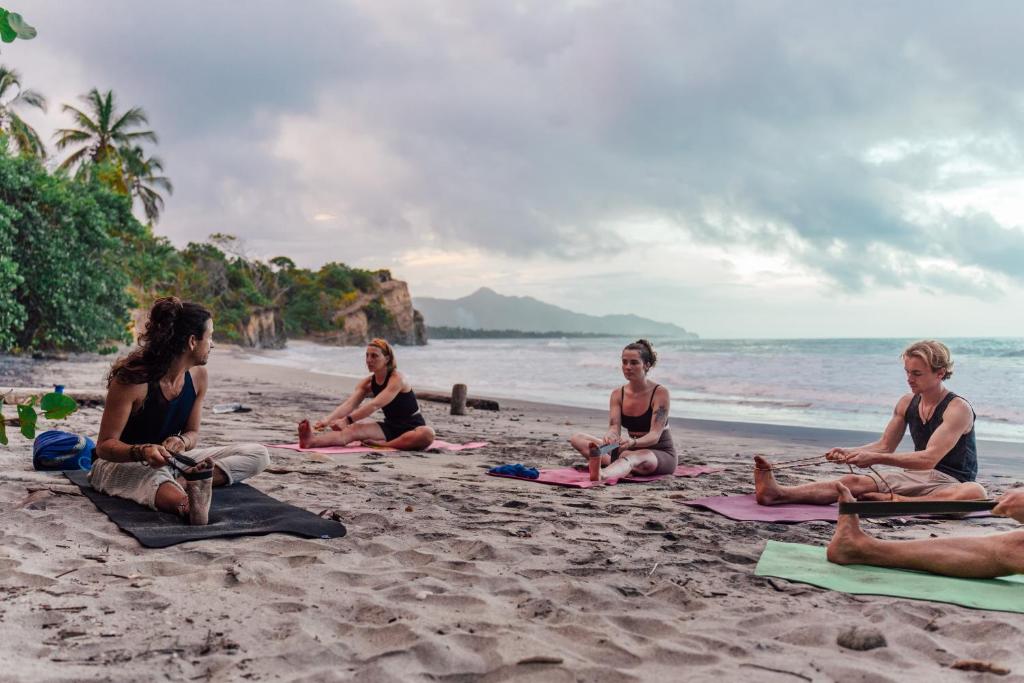
Jaba Jan, Palomino
Palomino sits about an hour east of Santa Marta, where the Sierra Nevada mountains tip down into the Caribbean and a wide river empties into the sea. Palomino has no shortage of hostels to recommend, and I’m sure if you’re planning your north-coast route you’ve come across the names Dreamer hostel or La Ponderosa at some point. I’m offering a different option, which I fell in love with.
Jaba Jan is planted right at that river/sea junction- not on the beach exactly, but at the point where the Palomino River meets the ocean, which is its own kind of magic. That landscape truly has one of the most breathtaking views I’ve seen in my life.
Where the river meets the sea
The location is the whole point here. You can kayak down the river and let the current carry you toward the sea, wade across, and sit on a beach that feels completely untouched. The landscape is dramatic. Mountains behind you, mangroves and jungle on the banks, Caribbean sea in front. Jaba Jan leans into the hippie, low-intervention vibe that Palomino has built its reputation on.
Kayak rental and how to spend a day here
The hostel rents kayaks, which is the best way to experience the river properly. A morning on the water followed by an afternoon on the beach is as good a day as you’ll have on the Colombian coast. There are also tubing operators nearby if you prefer something more leisurely. Beware, the hostels’ incredibly friendly dogs will jump on that kayak with you. You will have the best companion for the day.
The cleanliness caveat: setting honest expectations
I’ll be straight with you: Jaba Jan is not the most manicured hostel on this list. The facilities are basic, some things need a bit of maintenance, and it has the lived-in feel of somewhere that’s been running hard for years. For some people that’s a dealbreaker. For me, and for most of the travellers I met there, it’s completely part of the charm. If you need pristine, go elsewhere. If you want character, this is your place.
[Check availability at Jaba Jan]
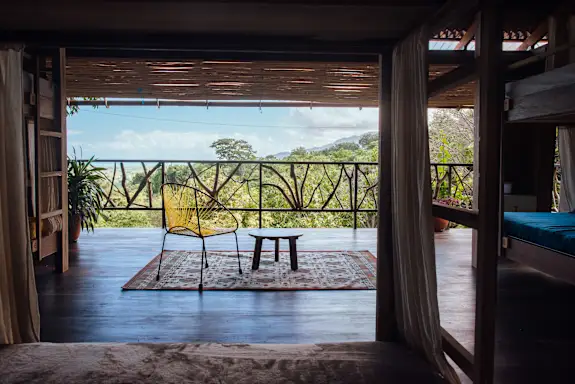
The Fort, Costeño Beach
Also on Costeño Beach, but a completely different box of frogs to Los Hermanos. The Fort is set up in the jungle above the coast, with views down through the trees to the water. It has the best cocktails of any hostel I visited in Colombia – not the cheapest, but genuinely good.
Jungle vibes and views
The aesthetic here is rustic jungle lodge. Elevated wooden structures, open-air common areas, the sound of the sea below you and insects around you. It feels more like a boutique eco-place than a hostel, which explains the slightly higher price point. If you’ve been doing dorm life for a few weeks and need somewhere that feels a little special, The Fort delivers.
The cocktail situation
I still think about the cacao espresso martini I had here watching the sun drop. One of the hostel owners used to be a mixologist, and they make a lot of the syrups in house from the fruit grown on the property – How’s that for a hostel? They rotate the menu and have some genuinely creative stuff happening. It’s worth budgeting for at least one proper night at the bar with some newly made friends.
The practical logistics of Getting There
This is the one complication. The Fort is not directly on the beach, and getting there involves a bit of a trek depending on where you’re coming from. I was arriving from Palomino via moto, and my moto driver hadn’t heard of the hostel. It was also a “you walk whilst I drive your bags up the hill” situation with my driver, so be warned, it’s a steep dirt road.
Check their current access instructions before you arrive- the route can be muddy in wet season and is more of a mission than it looks on a map. Completely worth it, but don’t arrive tired and expecting to walk straight through the front door.
[Check availability at The Fort]

Rio Hostel, Buritaca
Buritaca barely registers on most Colombia itineraries, but El Rio is putting it on the map. This legendary backpacker haunt sits on the river, organises tubing and water activities, and hosts what I’d call one of the best Friday nights on the Colombian coast.
The Friday party: what it’s actually like
The weekly party at El Rio has developed a genuine reputation. Some international artists have played here; it has that kind of word-of-mouth pull among travellers who are paying attention. It’s not a rave. It’s more like a festival bar that happens to be in the middle of the jungle: good music, good crowd, fires, the sound of water in the background.
Tubing and river activities
The river access is the daytime draw, with tubing as the main activity. You float downstream through jungle-flanked banks, which is as relaxed and beautiful as it sounds. Perhaps with a beer in hand. The hostel also connects guests with other water activities depending on the season; ask on arrival.
Is the social scene good for solo travellers?
Very. The layout of the hostel means communal meals and shared activities happen naturally rather than feeling forced. Connections formed those party evenings stick around the following morning, and friendship groups only increase in size over time. I have friends that are still in contact with those they met at Rio Hostel. It has the kind of gravitational pull that only specific places manage.
[Check availability at Rio Hostel]
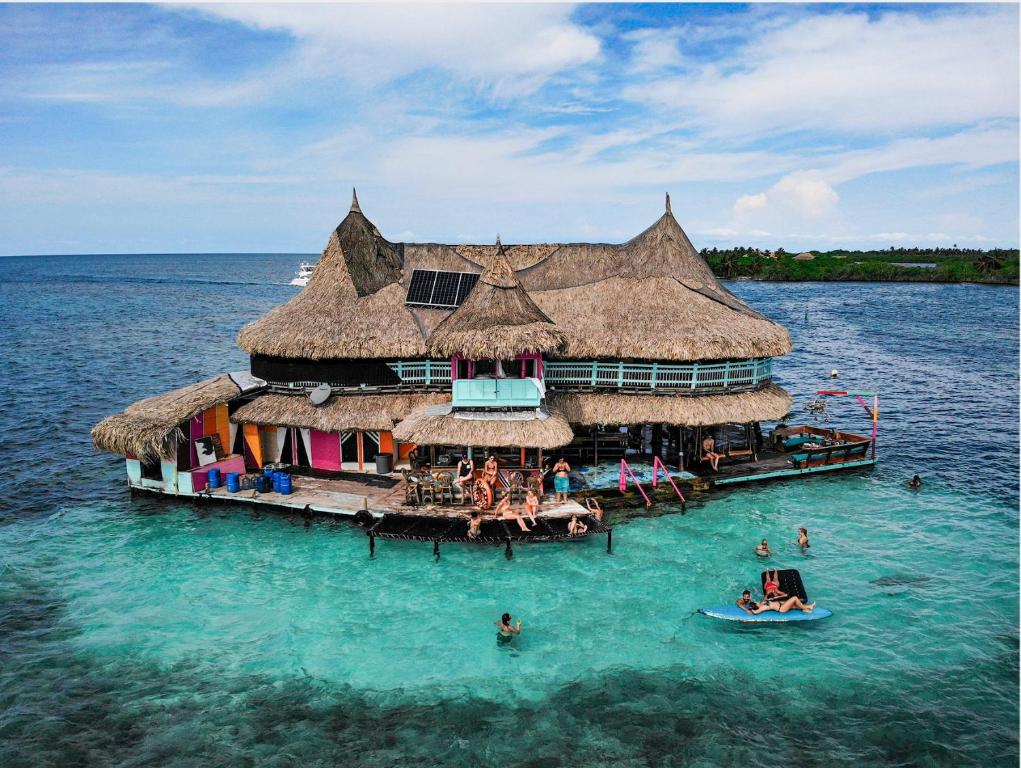
Casa en el Agua
This hostel gets its own category. Casa en el Agua is a floating hostel, a structure built on the water in the San Bernardo Islands off the coast near Tolu, about 2 hours from Cartagena by boat. There is no beach. There is no land. There are hammocks over the Caribbean Sea, and that’s precisely the appeal.
What is Casa en el Agua?
In short, it’s exactly what it sounds like: a hostel that floats. You sleep in dorm beds or private rooms, eat communal meals, snorkel off the side, and spend your days doing very little very beautifully. The water around the islands is clear and calm. There’s no Wi-Fi worth speaking of, which you’ll find either terrifying or exactly what you need.
Getting there is half the journey
You get to Casa en el Agua by boat from Cartagena, which requires getting yourself to Cartagena first. The hostel coordinates transfers and it’s well-organised. Once you’ve booked, they’ll tell you exactly where to go and when. Budget for both the boat and a night or two in Cartagena to buffer around ferry times.
What to expect
To me, two things stand out. First: the silence. Being out on the water with no road noise, no motorbikes, no construction is genuinely unusual, especially in Colombia, and it recalibrates your nervous system pretty quickly. Second: the social dynamics. Because everyone is stuck on the same floating structure, the community forms fast. I’ve rarely met a group of travellers that meshes as quickly as this one.
Is it worth it?
Yes, with one caveat: it’s not cheap by hostel standards, and the journey takes real time. If your Colombia trip is short, it might not make sense. If you have the time, a little extra to budget, and can get yourself to Tolu, don’t skip it. It’s the most genuinely unique hostel and I’ve never met anyone that regretted it.
[Check availability at Casa en el Agua]
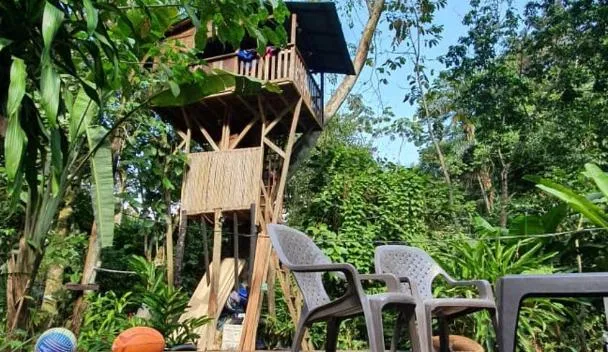
Treegana, Acandí
Acandí is in the Gulf of Urabá, close to the Panama border, in a part of Colombia that most travellers never reach. Treegana is built into the jungle on the outskirts of town- treehouses, trails, and more biodiversity per square metre than anywhere else on this list. Did I mention treehouses?
What the accommodation is actually like
The accommodation is literally in trees. Raised wooden platforms and structures built around the canopy, with hammocks and basic but thoughtfully designed rooms. It’s rustic without being uncomfortable, they’ve done the work to make it feel like a genuine experience rather than a gimmick.
Wildlife: howler monkeys, birds, and the sounds of the jungle
Expect to be woken up by the terrifying growls of howler monkeys. It’s a must-do experience for everyone in the continent at least once. The birding here is exceptional too – the Gulf of Urabá sits on a major migratory route and the resident species are extraordinary even for non-birders. Treegana’s setting means you’re inside the wildlife, at the heart of the action.
Hiking nearby and how to get to Acandí
There are trails in the hills around Acandí that offer views across the Gulf and into Panama on clear days. The hostel can point you toward guides if you want to go deeper into the jungle.
Getting here is part of the adventure: you’ll fly, or take a bus to Turbo (from Medellín) and take a boat across to Acandí, which takes about an hour on a lancha. It’s not hard, but it does require some forward planning. This is also the type of place where the Spanish you’ve learned will come handy.
[Check availability at Treegana] | [Book the Turbo–Acandí boat crossing]
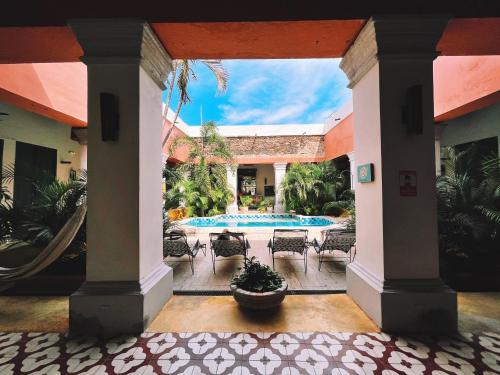
República Hostel, Santa Marta
Again, República isn’t a beach hostel in the literal sense, but is in the centre of Santa Marta’s historic district. It earns its place here as the best base for exploring the coast around the city, and it’s beautiful enough to justify a mention on aesthetics alone.
Architecture and atmosphere
The building is a restored colonial mansion: high ceilings, tiled floors, arched doorways, the kind of place that makes you feel slightly better about yourself just for being in it. The common areas are well-designed, cooling, and there’s a swimming pool in the courtyard that becomes the social centre on hot afternoons (which in Santa Marta is every minute of every day).
Nearby attractions within walking distance
You’re in walking distance of the Mercado Público, the Parque de los Novios, and a dozen good restaurants. The beach at El Rodadero is a short taxi ride. More importantly, you’re a well-positioned base for day trips to Tayrona National Park and the Ciudad Perdida trek- both of which you should book from Santa Marta.
Best for: travellers who want comfort without chaos
This is the hostel for people who need a hostel price point but can’t quite face hostel chaos. The vibe is mature and social without being aggressively party-focused. If you entered without knowing it was a hostel, you’d never expect that the rooms would be full of bunk beds.
If you’re doing Tayrona and want somewhere to decompress afterwards, this is where I’d direct you.
[Check availability at República] | [Book Tayrona day trips from Santa Marta]
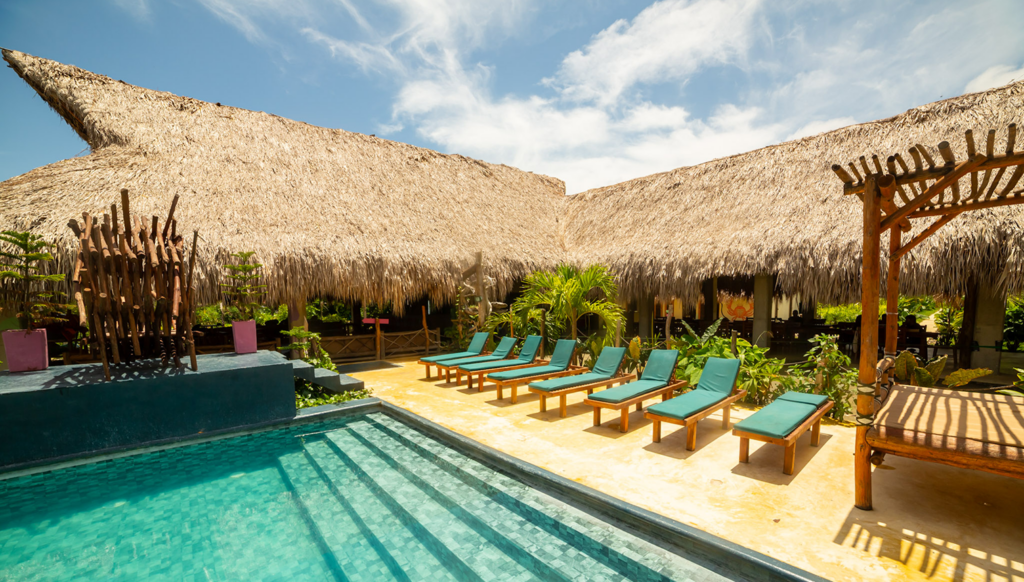
Makai Beach Hostel, Turbo/Necoclí
Turbo is the jumping-off point for Acandí and Capurganá and most travellers treat it as a transit town; a night in a forgettable hotel before the boat. Makai Beach Hostel is the reason to stop treating it that way.
The pool situation
The pool at Makai is, genuinely, enormous. I don’t know the square footage but it’s the kind of pool that makes you revise your plans for the afternoon. There’s a private volleyball court, cocktail classes run by the bar staff, and decor that’s been thought about properly. It genuinely looks like a boutique hotel.
Cocktail classes and volleyball: activities breakdown
The cocktail classes are a genuine social event, not a tick-box activity. They run in the early evening and tend to drag on pleasantly into the night, where you can sip on the margarita you just made. The volleyball court sees real use too.
The hostel has a mixed crowd of Colombians and international travellers which gives it an energy different to the more gringo-heavy hostels elsewhere on the coast. It’s a refreshing palette cleanser and one I highly encourage.
The Colombian crowd dynamic: why this makes it better
Most of the beach hostels on this list are heavily international. Makai draws a significant number of Colombian guests, families, groups of friends, couples, I think due to its more isolated location and unwillingness for gringos to step off the tourist trail. This gives Makai a warmth and a liveliness that’s more authentic than places that feel like they exist purely for backpackers.
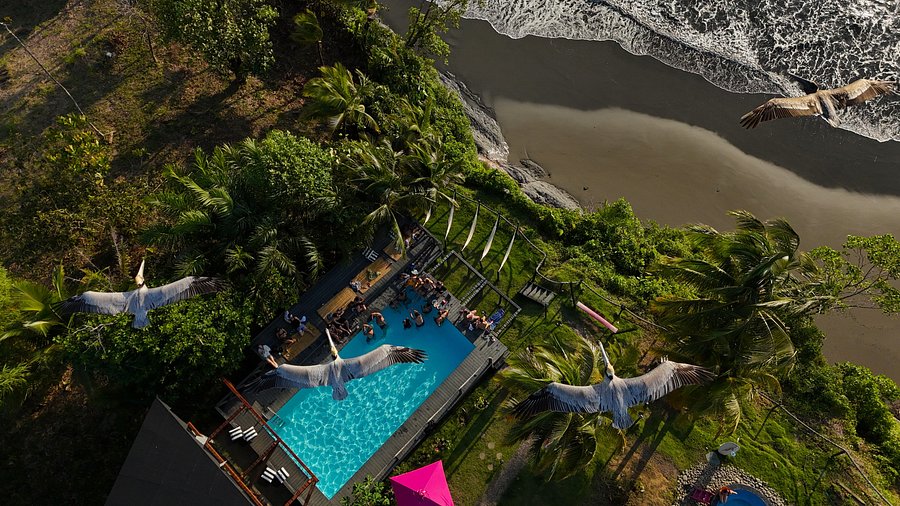
Melo Party Hostel, Capurganá
Capurganá is only reachable by small plane from Medellín or boat from Turbo, which puts it in a different category to the rest of the Caribbean coast, similar to Makai: less visited, less developed, and considerably more beautiful. Melo sits in the middle of the village and somehow manages to be the right hostel for whatever mood you’re in.
Party or chill: how it caters to both
Most hostels with “party” in the name make you feel slightly exhausted if you’re not in the mood. I know I always raise an eyebrow when I see this whilst scrolling through Hostelworld. Melo avoids this. The common areas have enough space and separate enough zones that you can be antisocial if you need to be, and the crowd on any given night tends to include people who’ve been there a while and settled into their own rhythms.
Getting there: the moto situation explained
If you arrive by boat and the main path to the hostel is muddy, which it often is (this is a rainforest), you’ll pay around 5,000 pesos for a moto-taxi to get up to the hostel. It’s not glamorous but it’s quick and the drivers know the route. Budget for it and don’t be surprised.
Power outages: honest flag about the area
Capurganá’s electrical grid is unreliable. Outages happen, sometimes for a few hours. The hostel handles it well, they have backup lighting and it’s not a crisis, but if you need to charge equipment or work remotely, be aware. I’d treat it as part of the off-grid appeal rather than a problem. Something to keep in mind my fellow digital nomads.
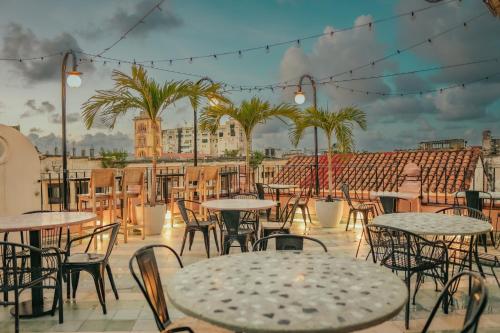
Casa Movida, Cartagena
Every Colombia trip seems to pass through Cartagena, and Cartagena’s hostel scene is wildly variable. Casa Movida occupies a beautifully painted building in the cool Getsemaní neighbourhood, has a terrace and a little pool, and manages to feel genuinely welcoming rather than just photogenic.
The building and neighbourhood
Getsemaní is where you want to be in Cartagena if you’re on a budget and want some life around you. The walled city is a 15-minute walk; the local bars and restaurants around the hostel are excellent and affordable. Casa Movida sits on a street with good natural foot traffic, which means the terrace is always busy without ever feeling claustrophobic.
The pizza place next door
There’s a great pizza spot immediately next to the hostel. I went twice. The owner and the hostel staff clearly have a good relationship too (green flag)- guests get steered there, which is a reliable indicator that it’s actually good rather than just convenient. Find it when you arrive to the left of the staircase leading up to the hostel. This is also where you’ll have breakfast in the mornings.
Terrace and pool: how it compares
For Cartagena, a rooftop terrace and even a small pool is a genuinely differentiating feature. The pool is not the main reason to stay here; in fact I did not actually see anyone swimming in it during my stay, but the building, the neighbourhood, and the friendliness of the staff are.
[Check availability at Casa Movida]
How to Choose the Right Beach Hostel in Colombia
By vibe
- Party-focused: El Rio (Fridays specifically), Melo (if the mood takes you), Makai
- Social but not overwhelming: Los Hermanos, Republica, Casa Movida
- Chill and off-grid: Jaba Jan, Treegana, Casa en el Agua
- Adventure base: Treegana, El Rio, Melo
By location
Colombia’s coast splits into distinct zones. The Caribbean coast (Santa Marta–Tayrona corridor) has Los Hermanos, Jaba Jan, The Fort, El Rio, and Republica. The Gulf of Urabá near the Panama border has Makai, Melo, and Treegana. The San Bernardo Islands have Casa en el Agua. Cartagena is its own category: more city than beach, but too good to skip.
If you’re on a tight schedule, I’d suggest picking one or two zones and staying in it. Trying to do Cartagena, the Santa Marta coast, and the Gulf of Urabá in two weeks is possible but rushed. The Gulf in particular rewards a slower pace as there’s SO much to do, and you’ll also want to factor in some days to just take it chill.
Practical Tips for Beach Hostels in Colombia
When to book
High season is December to January and Semana Santa (Holy Week, usually March/April). During these windows, places like Casa en el Agua and Los Hermanos fill weeks out. Shoulder season — February to March and October to November — is excellent: fewer crowds, lower prices, still warm. Avoid the worst of rain season (October to November on the Pacific side; slightly different on the Caribbean coast) if you’re doing jungle-adjacent places like Treegana or The Fort.
What to pack for coastal Colombia
- Cash. ATMs are unreliable in smaller towns and Capurganá has none. Take pesos.
- A good mosquito repellent. DEET-based for jungle hostels like Treegana and El Rio are essential. I won’t upload a photo of my legs from during that trip for good reason.
- A dry bag. Useful everywhere; essential for Casa en el Agua and river activities.
- Flip flops you don’t care about. They will end up in mud at some point.
- A sarong or light cotton layer. Night breezes on the Caribbean can surprise you.
Safety basics on the coast
The Colombian coast is generally safe for travellers who take standard precautions. Don’t walk alone at night in unfamiliar areas, don’t flash expensive gear at bus stations, and trust your instincts. The hostel areas covered here are well-worn backpacker territory and the staff at all ten places will give you local safety guidance.

Leave a Reply